Price: $18.95 - $27.90
(as of May 26, 2026 04:57:38 UTC – Details)
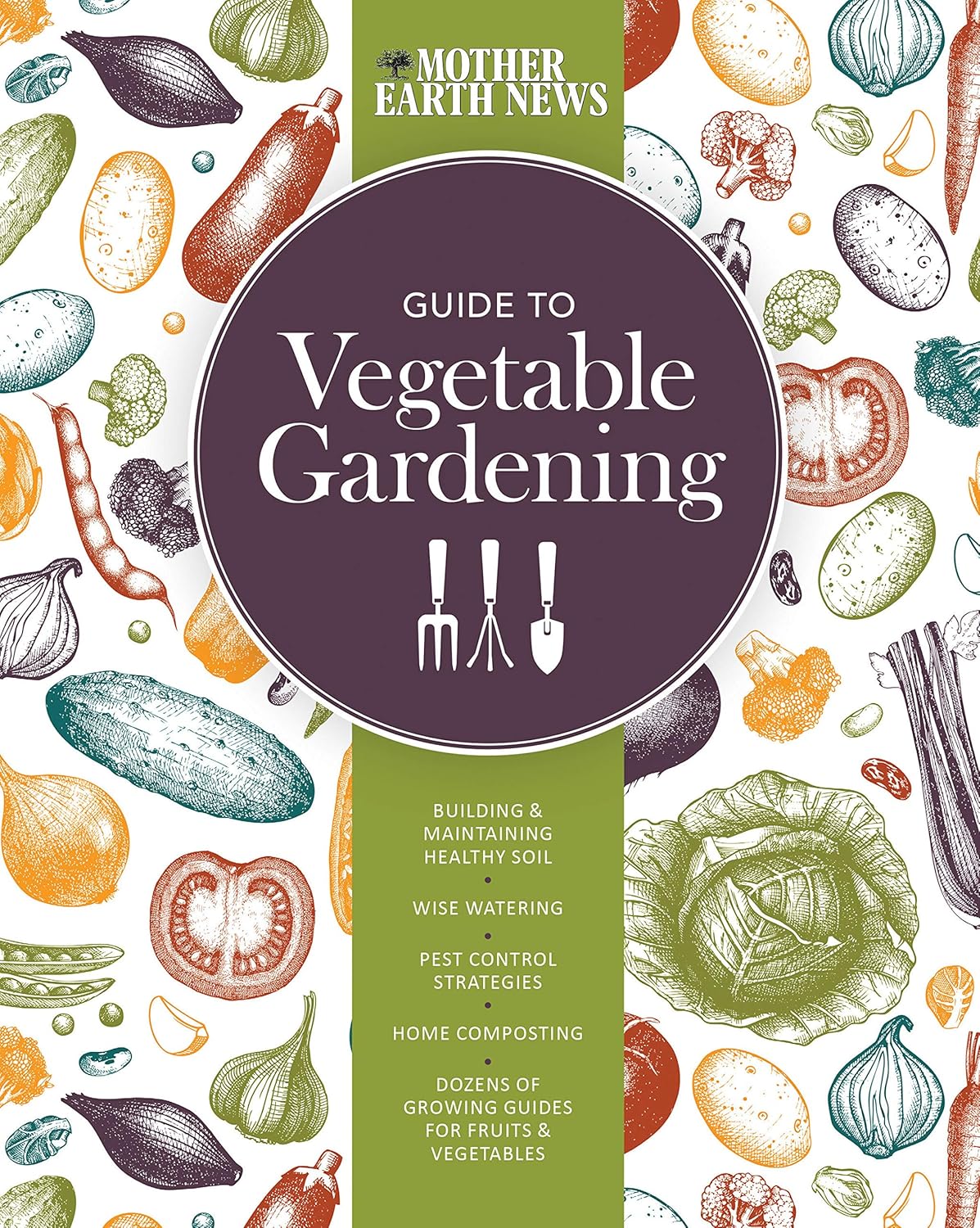
The Mother Earth News Guide to Vegetable Gardening is a must-have volume packed with time-tested information, photographs, and charming illustrations for home gardeners everywhere.
For years, millions of readers have turned to Mother Earth News for trusted advice on growing vegetables and fruits. The Mother Earth News Guide to Vegetable Gardening harnesses decades of wisdom, bringing together all the indispensable techniques, complete growing guides, helpful tips, useful photographs, and inspiring illustrations for which Mother Earth News is known.
Plan for self-sufficiency with a garden focused on edibles! Choose from a variety of plans for kitchen gardens, browse strategies for small space gardening, or up your gardening game by installing and maintaining permanent beds. Soil concerns? Get the dirt on building fertile soil, soil pH, compost, vermicompost—even biochar. Longtime gardeners are sure to find something new, from vertical gardening to plans for extending the seasons.
That’s right, garden through the seasons with dozens of vegetable-and fruit-specific growing guides. Start with your favorites or learn to love something new (Asian greens or fruit trees, anyone?). In slower-growing or more challenging seasons, Mother Earth is there to help. Whether you need to know the best vegetables to grow in the shade or the top gardening tips for soil health in winter, this book has it all.
From the Publisher

Get creative by planting wherever you can! You can even turn a wheelbarrow into a mini-garden.
 Small-space gardening If a deck or balcony is the only space where you can grow, go crazy with containers. Don’t let limited growing space stop you from creating a bountiful garden. Learn about this impressive urban garden in London at official website. In square-foot gardening, you create a grid and plant crops in 1-by-1-foot squares.
Choose Your Small-Space Adventure
Creative Gardening techniques
Here are my top suggestions for creating a productive garden within the constraints of whatever space you have to work with:
No Space: If you have a large south-facing window, you can grow herbs and salad greens in pots, containers, or a window box. You may also succeed with container-grown crops such as tomatoes and peppers depending on the amount of sun you can provide them. The key to success is picking compact varieties suited to your taste and available space. Small Balcony or Patio: In addition to the options above, a person in this category can grow crops that require more sun and vertical space. For example, try growing large pots of strawberries or trellising cucumbers. The most inspiring gardener I know from this category is Mark Ridsdill Smith, who grows more than worth of food each year on his 9-by-6-foot balcony and five south-facing window boxes in London. Small Yard: Perhaps choose plants that go well together. For example, you could plant a salad garden (i.e., different varieties of greens and lettuce), a soup garden (i.e., carrots, onions, and celery), or a salsa garden (i.e., tomatoes, peppers, and cilantro). For people just starting out and those growing in shady conditions, I think a small salad garden consisting of a few varieties of ‘cutand- come-again’ lettuce varieties or mesclun mixes, one to two favorite herbs, and a compact tomato plant or two is a great introduction to the pleasures of the kitchen garden. Leafy greens such as spinach and chard also do well in small, shady plots.

All about growing strawberries
by Barbara Pleasant
The first fruits of the summer, homegrown strawberries are a thousand times tastier than the hard, flavorless supermarket options. Strawberries are cold hardy and adaptable, making them one of the easiest berries to grow. Growing strawberries in containers is a quick small space solution, and they thrive in raised beds.
Types To Of Strawberries To Try
Strawberry types vary in their growth habits and fruiting times. For prolonged productivity and unique flavors, consider growing several types. June-bearing strawberries produce their crop over 3 weeks from late spring to early summer. Because of their earliness, high quality, and concentrated fruit set, June-bearers are the best for preserving.
Everbearing strawberries, also called day-neutral strawberries, produce a heavy set of berries in early summer followed by several more lighter flushes in late summer and fall. They need cool night temperatures (below 65°F) for good fruit set. These are excellent strawberries for large containers or raised beds, where you can give them attentive watering and regular feeding.
Alpine strawberries bear dime-sized, intensely flavored berries that may be red, yellow, or white, depending on the variety. Many varieties do not produce runners but do rebloom and set fruit intermittently all summer. Because of their small size, alpine strawberries are easiest to pick if grown in raised beds or roomy planters.
Musk strawberries produce small fruits with a pungent aroma and complex flavor. Berries tend to be precious and few; improve fruit set by adding male plants every couple of years. The unusually tall, vigorous plants form a dense groundcover that can choke out weeds. Musk strawberries are too rowdy for containers.
How To Plant Strawberries
Choose a sunny, fertile site free of perennial weeds. A strawberry patch will produce well for 3 to 4 years, so enrich the site with plenty of organic matter. Raised beds or planters are ideal for most types of strawberries, plus they make the berries easier to pick.
A few varieties can be grown from seed, but most gardeners save 1 to 2 years’ growing time by setting out individual container-grown plants or dormant bareroot plants sold in bunches. Transplant individual plants to the same depth they grew in their containers. Spread out bundled plants and trim off any dead leaves and roots. Find the central crown and transplant so the base of the crown rests at the soil line and the roots are spread out. Mulch between all strawberry plants with pine needles, chopped leaves, or another mulch that supports acidic soil conditions. Space requirements vary by strawberry type and variety. Those that produce a lot of vigorous runners should be planted 18 inches apart (they will fill in most of the vacant space by late summer). Plant alpine strawberries that do not produce runners—such as ‘Mignonette’—12 inches apart in beds or 8 inches apart in containers.
Tips For Growing Strawberries Following spring planting, pick off flowers that form on June-bearing varieties their first season. With everbearing varieties (especially alpines), pinching off the first flowers can lead to better production of laterripening, more intensely flavored fruits. With vigorous varieties, pinch off about half of the runners to help the mother plants concentrate on the following year’s crop. If you don’t need more plants, removing all runners from everbearing varieties will increase the production of big juicy berries. Renovate beds of June-bearing strawberries in summer, after the fruiting season has ended. Pull weeds, and thin plants to 6 inches apart. Mow or cut back old leaves 4 inches from the ground, and distribute a light application of a balanced organic fertilizer between the plants. Top the renovated bed with ½ inch of weed-free compost or fertile garden soil. Handled this way, a planting of 25 June-bearing strawberry plants grown in a 30-square-foot bed will produce about 25 quarts (close to 30 pounds) of strawberries annually for 3 to 4 years. Most strawberries produce runners, which can be trained to take root in promising places. Lift and move wanderers in late summer or first thing in spring. Varieties that do not produce runners can be divided and replanted, preferably in early spring.
Publisher : Voyageur Press
Publication date : April 15, 2017
Language : English
Print length : 272 pages
ISBN-10 : 0760351872
ISBN-13 : 978-0760351871
Item Weight : 1.95 pounds
Dimensions : 8 x 1 x 10 inches
Best Sellers Rank: #2,033,334 in Books (See Top 100 in Books) #1,074 in Gardening Encyclopedias #1,184 in Organic & Sustainable Gardening & Horticulture #1,270 in Vegetable Gardening
Customer Reviews: 4.7 4.7 out of 5 stars (64) var dpAcrHasRegisteredArcLinkClickAction; P.when(‘A’, ‘ready’).execute(function(A) { if (dpAcrHasRegisteredArcLinkClickAction !== true) { dpAcrHasRegisteredArcLinkClickAction = true; A.declarative( ‘acrLink-click-metrics’, ‘click’, { “allowLinkDefault”: true }, function (event) { if (window.ue) { ue.count(“acrLinkClickCount”, (ue.count(“acrLinkClickCount”) || 0) + 1); } } ); } }); P.when(‘A’, ‘cf’).execute(function(A) { A.declarative(‘acrStarsLink-click-metrics’, ‘click’, { “allowLinkDefault” : true }, function(event){ if(window.ue) { ue.count(“acrStarsLinkWithPopoverClickCount”, (ue.count(“acrStarsLinkWithPopoverClickCount”) || 0) + 1); } }); });